


Numeroși clujeni s-au plâns că la restaurantele cu patroni unguri din centrul Clujului sunt serviți cu friptură sub forma Ungariei Mari, cu harta Transilvaniei inclusă.
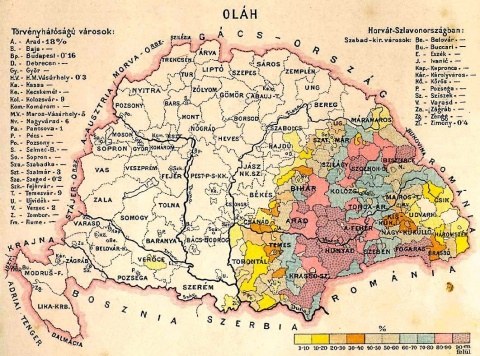
Un client a avut o surpriză zilele trecute la o terasă de fițe din centrul Clujului, după ce a comandat un cotlet de porc, să fie servit de chelner cu o friptură sub forma unei hărți a Ungariei Mari, cu Transilvania și Croația incluse. Pe când și băuturi alcoolice în culorile alb, roșu și verde? Pe când OPC va face o verificare a acestor instigări culinare?
NapocaNews
Susțineți NapocaNews.ro
Într-o lume care cenzurează site-urile de editoriale și știri alternative ca NapocaNews.ro, vă rog să ne sprijiniți financiar printr-o donație pentru informații adevărate și pe românește.
Puteți face o donație prin transfer bancar:
Fundația Culturală Sarmisegetuza - Cluj
(proprietar NapocaNews.ro)
Cont IBAN: RO85BRDE130SV27532721300
👉 Preferi să donezi rapid online?
Poți sprijini NapocaNews.ro imediat folosind PayPal:


Fara comentarii la “Restaurantele ungurești din Cluj-Napoca vând friptura sub forma unei hărți a Ungariei Mari”
despre ce terasa e vorba? Cumva Bulgakov??? Se stie ca aceasta finanteaza organizatia terorista maghiara Magyar Garda pentru inarmarea secuilor! Asa ca fiti atenti ca gulyas-ul ce-l mancati azi e kalashnikovul de maine!!!
Nem tudom, én román vagyok, nem loptam semmit és nem az én hibám, csak azért mert román vagyok..jol érzem magam az én földön, persze, mert itt születtem, és azért is tanultam magyarul, hogy legyen jobban is..inkabb olyan román vagyok aki szereti a béket.. Szoval, még egyszer, nem mindenki ilyen mint te hiszed.
Şî la mine in gredină o aparut un craştavete ca cum Ungaria din poza. Ungurii sio bagat coada si la seminta si is cu necuratu ca manipulizeaza răsadurile la rumani.
Eu am comandat un corn cu rahat,si sa vezi..avea forma rommaniei 🙂 , a fost foarte gustos .frustratilor !!!!
N(oii) D(iletanti) te invata? 🙂
Daca nu inseamna nimic, de ce mai stati in EL?
De ce visati la EL?
Cuvantul savin iti spune ceva?
"SOVIN""
Daca peste tot vedeti Ungaria mare , inseamna ca este ceva mai etern decit vreti voi ! defapt linia Carpatilor acest lucru o sa indice todeauna !
:))) ce retardat esti :))))))
BRAVO BA ZIARISTI NATIONALISTI IN SFIRST POT SA MANINC O BUCATA DIN UNGARIA MARE….. BA CHIAR ASA JOS ATI AJUNS VA OCUPATI DE PROSTII . OARE DUPA CE AM CONSUMAT ACEASTA FRIPTURA DACA MERG LA BUDA CE CULOAREA VA AVEA CE IESES ? INVIT ZIARISTII SA FILMEZE POATE VA FII O HARTA A AUSTRO-UNGARIEI ….
Bă, da idioţi mai sunteţi…
Dragi tovarasi, ati uitat sa va luati pastilele?
Mă doare burta .. nu de la friptură ci de la râs 😀
Bravo NapocaNews, asta da presă de calitate 😀
btw, mie mi se pare că seamănă cu România. Dar fiecare vede ce vrea, cum spune Freud 😀
http://www.romanianlawoffice.com/uploads/default/files/taxes-romania.jpg
Claudiu Boariu Cine se aseamana se aduna :)))))
Recomand romanilor seriosi sa manance doar din zona Budapestei poate si a Szeged-ului. Sa lase in pace Transilvania noastra draga ! Cu toate ca daca o lasa o mananca ungurii sau o dau la caini ! Nu e bine : sa manance cu ura zona Budapestei si cu dragalasenie zona Transilvaniei ! Ce idei bune , nu ? 🙂
Sirooook a rohogestol:)))))) Legjobb hozzaszolas!
Da,harta mongoliei..cred ca ai manca-o cu pofta..te-ai simti ca acasa…
Si tu de ce te bagi ca strampul??
Daca am vrea sa muscam din Ungaria,ar trebui o harta a Mongoliei…Voi sunteti plasati pe un teritoriu care nu va apartine…
Dacian continuity,,
3. 1. 4th-10th centuries sources
In the 4th century, the Historia Augusta mentions that
On seeing that Illyricum was devastated and Moesia was in a ruinous state, he abandoned the province of Trans-Danubian Dacia, which had been formed by Trajan, and led away both soldiers and provincials, giving up hope that it could be retained. The people whom he moved out from it he established in Moesia, and gave to this district, which now divides the two provinces of Moesia, the name of Dacia.
—Historia Augusta [11]
The Roman-Gothic author Jordanes, who was raised in Moesia and was familiar with the ethnic character of the area, [12] wrote in the 6th century that the Romans had only moved the legions from Dacia, and not the population.
the Emperor Aurelian, calling his legions from here (evocatis exinde legionibus), settled them in Moesia and there, on the other side, he founded Dacia Mediterranea and Dacia Ripensis —Jordanes [13]
Excavations continued at the bi-rithual cemetery in Berghin at the point „The Pear”, Judet Alba.http://www.cimec.ro/scripts/arh/cronica/detaliu.asp?k=59
They executed two sections (12.50 x 2 m, respectively, 14.50 x 2 m) in order to explore the upper north-north-east of the necropolis remained unexplored. During investigations 81 graves of cremation have been identified , which raises the number of funerary complexes uncovered so far to 610. Of these, 52 tombs belong to the Dacian population identified in the settlement of the village precincts during the Roman period (II-III century AD). The graves are oval, circular, diamond or rectangular contour and are marked by river boulders. Of the earth filling of the sepulchral holes were collected Dacian and Roman pottery fragments, pieces of coal and scrap of calcined human bones, one portion of a glass and bronze bracelets, etc.. The other 29 tombs are with cremation urns (26) or simple holes (3) featuring the prefeudal cemetery (VII-VIII century AD). Urns containing cremated remains of the defunct (whole and fragmented bones), pieces of coal and various pieces of bronze (one ear from an earring wire), iron (staples, hook, buckles with spin, nails, knife blades, etc.). and Stone (tips, blades, etc..). It is noted that 601 M is as white (126 x 78 cm) and contains a large quantity of scrap cinerary, especially charcoal and burnt earth, calcined bone chips and a few scattered pottery fragments from a vessel broken on the ritual pyre. In conclusion, this year’s excavations have revealed further testimony about the process of Romanization of the indigenous Dacians during the Roman domination in Dacia and during the formation of the Romanian people (VII-VIII century AD).
An anonymous author who pronounces an encomium in the honour of Caesar Constantine (emperor between 337-361) speaks of restored Dacia (Dacia restito) eulogizing him for the victory obtained against Goths and Taifals in 332 [14]
The Byzantine chronicler Priscus of Panium mentions in the year 448, the presence of a Latin-speaking populace North of the Danube. The populace was called by him „Ausoni”. [15] It should be noted that this was at a time before Slavic migration, so the exonym “Vlach” was not applied to this populace. [16]
For the subjects of the Huns, swept together from various lands, speak, besides their own barbarous tongues, either Hunnic or Gothic, or – as many as have commercial dealings with the western Romans – Ausoni [17]
(…) a barbarian who sat beside me and knew Ausoni (…)
—Priscus of Panium [18]
In 545, Procopius of Caesarea mentions[not in citation given] [19] „The trick played by an Ant from present-day Moldavia who is supposed to have passed himself off as a Byzantine General by speaking a form of Latin which he had learned in these regions.”
At the Nicaean Synod in 787, the following person is signaled on the 73rd seat: “Ursus Avaritianensium ecclesiae episcopus.” [20] The name of the episcope of the Avaritians (i.e. people ruled by the Avars), being Ursus, is of Romanic origin. [21]
An ancient letter from one Emmerich of Elwangen to Grimaldus, abbot of St. Gall, written about 860 mention Vlachs, under the name of Dacians, living north of Danube together with Germans, Sarmatians, and Alans.
The chronicle Oguzname, the oldest Turkish chronicle in existence, mentioning a warlike expedition of the Cumans, affirms the existence of a “Country of the Vlachs” (Ulaqi) east of the Carpathians in 839[dubious – discuss], affirming that the region was well organized and with a powerful army. [23]
A ninth-century Armenian geography[clarification needed] mentions the country „Balak”. [24]
3. 2. 11th century sources
In the 11th century, Abu Said Gardezi wrote about a Christian people from Rûm situated between the Slavs and Hungarians: [25]
That is the Džaihūn which is on their /the Magyars’/ left side. Beside Saqlāb /Slavs/ are a people az Rūm / from the Byzantine Empire (Rûm) [26] or of Rome [27] [28] / who are all Christians and they are called N-n-d-r, and they are more numerous than the Magyars, but they are weaker. [29]
A rune stone from the Sjonhem cemetery in Gotland dating from the 11th century commemorates a merchant Rodfos who was traveling to Constantinople and was killed north of the Danube by the Blakumenn.
Rodvisl and Rodälv raised this stone for their three sons. This one after Rodfos. He /Rodfos/ was betrayed by the Blokumenn on his journey. God help the soul of Rodfod. God betray those who betrayed him /Rodfos/. [30].
An early 13th century biography of St. Olaf of Norway, now preserved in the 14th century manuscript Flateyjarbók also mentions Blokumenn as being Sviatopolk’s allies (in the early 11th century). [31] [32]
The traditional [33] [34] interpretation of the ethnonim Blakumenn or Blokumenn in Old Norse is Wallachian (Romanian), [33] [35] [36] [37] though alternative [34] explanation is that the term means ‘black men’; some authors interpret it as Black Cuman. [38]
According to Strategikon of Kekaumenos (1066), the Vlachs of Epirus and Thessalia came from north[verification needed] of the Danube and from along the Sava. [25]
These /Vlachs/ are, in fact, the so-called Dacians, also called Bessians. Earlier they lived in the vicinity of the Danube and Saos, a river which we now call Sava, where the Serbians live today, and /later/ withdrew to their inaccessible fortifications. (…) And these left the region: some of them were dispersed to Epirus and Macedonia, and a large number established themselves in Hellas.
—Kekaumenos: Strategikon [39]
.
Kekaumenos writes in 1078 that the Vlachs were the instigators of a 1066-1067 rebelliong against the Byzantine Empire. He mentions that these Vlachs, anticipating military turbulence, sent their wives and children “to the mountains of Bulgaria”, suggesting the existence of permanent settlements in that region and transhumant pastoralism, contradicting the Hungarian point of view that the Vlachs were nomadic. [25] .
3. 3. 12th-13th centuries sources
Nestor’s Chronicle, (1097-1110), relating events from 862 to 1110, mentions Wallachians attacking and subduing the Slavs north of Danube and settling among them. [25] {{Quote|For many years the Slavs lived beside the Danube, where the Hungarian and Bulgarian lands now lie. From among these Slavs, parties scattered throughout the country and were known by appropriate names, according to the places where they settled. Thus some came and settled by the river Morava, and were named Moravians, while others were called Czechs. Among these same Slavs are included the White Croats, the Serbs, and the Khorutanians. For when the Vlakhs (Волхмъ) attacked the Danubian Slavs, settled among them, and did them violence, the latter came and made their homes by the Vistula, and were then called Liakhs. (…) [40]
Coming from the east, they /the Magyars/ marched in haste over the high mountains, which are called the mountains of the Magyars, and began to fight against the Volochi (Волохи) and the Slavs who inhabited these countries. The Slavs had originally lived there, and the Volochi (Волохове) had subdued the country of the Slavs. Later, however, the Magyars drove out the Volochi (Волъхи), subdued the Slavs, and settled in their country. Since then, that region has been called Hungary.|Primary Chronicle [40]
Around 1120, the Gesta Henrici written by the cleric Godefirdus von Viterbium mentioned the countries conquered by Rome including “Blachina” (Blach, being a synonym to Vlach, meant Romanian) [25]
The Nibelungenlied (“The Song of the Nibelungs”), written between 1140 and 1160, describes a passage mentioning Vlachs and their leader, Ramunc. The context of the whole song was the marriage of Attila, and many cultures, each speaking a different language. From these, we find the duke Ramunc, who, together with seven hundred of his best fighters, scare away the horses of the Huns.
Men saw ride before King Etzel on the road many bold knights of many tongues and many mighty troops of Christians and of paynims. When they met the lady, they rode along in lordly wise. Of the Russians and the Greeks there rode there many a man. The right good steeds of the Poles and Wallachians were seen to gallop swiftly, as they rode with might and main. Each did show the customs of his land. (…) [41]
Before Etzel, there rode a retinue, merry and noble, courtly and lusty, full four and twenty princes, mighty and of lofty birth. They would fain behold their lady and craved nought more. Duke Ramung of Wallachia, with seven hundred vassals, galloped up before her; like flying birds men saw them ride.
—The Nibelungenlied [41]
Thomas Tuscus wrote, on the expedition of the emperor Conrad III against the Turks, in a Crusade during 1140 AD: “The troops from Provence, from France, Lotaringia and Germany went towards Constantinople through Hungary, Valahia and Pannonia” implying the existence of an organized Vlah state during the 12th century. [25]
The Byzantine writer Joannes Kinnamos writes of the Vlachs North of the Danube in 1167, saying:
Leon, also known as Vatatzes, brought many soldiers from other areas, even a large number of Vlachs, about whom it is said that they are the descendants of colonists from Italy. [39]
Niketas Choniates tells us that as Andronic Comnenos was heading towards the Principality of Galich in 1164, but was captured by Vlachs along the way. It’s important to note that at the time the Byzantine Empire controlled all the territory up to the Danube Delta (as the Empire of vlachs and Bugarians was only founded in 1185), including Dobruja, and the Principality of Galich controlled most of the Medieval state of Moldova. This leaves only Southern Moldova and Eastern Wallachia as the location of this kidnapping.
The Gesta Hungarorum also mention the presence of Vlachs in Pannonia and them mixing with Slavs, but retaining their language and culture. [42] The Gesta Hungarorum furthermore mentions that the Magyars conquered Transylvania from the Vlachs and Slavs
the inhabitants of that land were the basest of the whole world, because they were Vlachs [Blasii] and Slavs
—Gesta Hungarorum, Chapter 25 [43]
Thomas of Spalato mentioned the same thing.[verification needed] [44]
Weltchronik (World Chronicle) by Rudolf von Ems, written around 1250, mentions Vlachs living in Pannonia. [45]
In vromdin sundir sprachin/Valwen und wilde Vlachin/jensit des sneberges hant/sint lant du si begant [46]
Jansen Enikel’s Weltchronik (The Chronicle of the World), written in Vienna in 1277, mentions Charlemagne going on a campaign in the east (around 8th century) and meeting with Wallachians. [47]
Around 1285, In the chronicle of Simon of Keza, the Vlachs of Pannonia are mentioned as a settled population after the collapse of the Hunnish Empire. [48]
The Descriptio Europæ Orientalis, which was written by a French monk in 1308, discovered in the Paris Library in 1913, mention ten Vlach kings that were defeated by the Hungarians of Arpad. [49]
Therefore, Hungarians met the Vlachs in Panonia and drove them out in Transylvania. This explains the Romanian ethnogenesis.
3. 4. 14th-16th centuries sources
A papal census in 1332 found that of 3000 towns in Transylvania, only 900 had Catholic parishes. In Banat, around 95% of the population followed the Eastern Orthodox rite, and in Maramures, Orthodox Christians made up 90% of the population until Ruthenian refugees were settled in the region, dropping the percentage to 80%. [25]
In 1374, Pope Gregory IX wrote of Transylvania as having a „great populace which goes by the name of Valachian” („Multitudo quorundam popolorum qui Valachones vocantur”) [25]
The Chronicon Pictum says “This Gyula was a strong and great prince, who, while hunting in Transylvania, found a great city built by the Romans long ago.” Chronicon Posoniense then mentions the name of the town as “„ …civitas Alba in Erdeuel”.
In the 15th century, the Polish Chronicler Jan Długosz writes in his Historia Polonica that in a battle in 1070 between the cneaz of Polotsk and Kiev, the cneaz of Polotsk had in his army “Russians, Pecennegs, and Vlahs.”
Antonio Bonfini wrote: “Because the Romanians are descendants of the Romans, a fact that even today is attested by their language, a language that, even though they are surrounded by diverse barbarian peoples, could not be destroyed…. even if all kinds of barbarian attacks flooded over the province of Dacia and the Roman people, we can see that the Roman colonies and legions that had been established there could not be annihilated” [25]
In 1532, Francesco della Valle (Secretary of Aloisio Gritti, a natural son to Doge Andrea Gritti) [50] wrote: „the emperor Trajan, after conquering this country, divided it among his soldiers and made it into a Roman colony, so that these Romanians are descendants, as it is said, of these ancient colonists, and they preserve the name of the Romans” [25]
Despot Voda wrote in 1561: „we are a brave people of a warrior race, descendants of the illustrious Romans, who made the world tremor. And in this way we will make it known to the whole world that we are true Romans and their descendants, and our name will never die and we will make proud the memories of our parents” [25]
In the 16th century, Anton Verancsics wrote: “Transylvania is inhabited by three nations, the Szecklers, the Saxons, and the Hungarians; I would, nevertheless, add the Romanians, who, although they easily equal the number of all the others, do not have any liberties or a nobility, nor any rights of their own…” [25]
3. 5. 18th-20th centuries sources
Emperor Joseph the Second of Austria (1765-1790) tells us about the Romanians: “incontestably, the oldest and most numerous denizens of Transylvania.” [25]
Count Teleki, President of the Transylvanian Chancellery informs us in a document from 1791: “the Vlachs are the oldest inhabitants of Transylvania.” [25]
Hungarian historian András Huszti affirms, in his posthumous work, also dated 1791: “No other nation has a language as similar to Latin as the Vlachs. This is a sure sign which cannot deceive us that they are the followers of the old Roman colonies in Transylvania.” [25]
German academic Fr. Altheim affirmed: “Dacia, although home to a populace similar to Thracians, had chosen Romanization as opposed to Hellenization after the Roman Empire annexed the province. In Dacia, there seemed to have been a consistent choice made by its inhabitants to become Romans, something attested by consistent historical facts.” [25]
Mihály Cserei writes in the 17th century: “From Transylvania, people flee en masse to Moldova. I’ve tried everything to stop them, but nothing has worked.” [25]
József Benkő writes in 1777: “What remains of the Roman colonists who mixed with others are the Romanians.”
About the region of Fagaras, Antonio Possevino writes: “There are over 70 towns here, almost all of them completely populated by Romanians.” [25]
László Kőváry writes that before the 1848 revolution there were over a million Romanians in Transylvania and only 213,000 Hungarians, affirming that “you can travel for days and not hear a single person speaking Hungarian.” [25]
From András Huszti: „The offspring of the Dacians still live even today and live where their forefathers lived, and speak in a language similar to their forefathers.” [25]
István Losontzy writes: “Transylvania, to the East of Hungary, was beforehand called Dacia… the Hungarian kings only ruled this land through Transylvanian voievods.” [25]
Szilagyi Sandor writes: “Transylvania and Hungary were never together, and were always two different countries… as Transylvania always looked to the Orient, due to the fact that the majority of the population was Orthodox Christian, while Hungary always looked Westward.” [25]
Gaspar Bojtinus, historian of Gabriel Bethlen, wrote of the union of Transylvania with the Romanian principalities in 1600 as “inevitabilis fatorum lex”, implying that they have always been the same soil with the same people.
Iosif Bánki (1764) writes: “so great is the number of Romanians that they easily outnumber all the other nations of Transylvania combined.” [25]
Maria Tereza writes in 1748 of Transylvania as “Our Romanian principality.” [25]
French academic V. Duruy considers the colonization of Dacia: “By far the largest colonial effort in ancient history!” [25]
The English historian Gibbon writes in “Decline and Fall of the Roman Empire” in 1777 that after the withdrawal of the Roman legions from Dacia, done by Aurelian, a significant part of the province’s population stayed behind, being more afraid of moving than of Gothic rule. Later, he adds “These people became a great nation” and then writes “The Vlachs preserve many elements from Latin, and they are proud of their Roman heritage. Even surrounded, they did not mix with the barbarians.”
The German historian Johann Thunmann writes “The Vlahs North of the Danube are brothers of those in Macedonia, descended from Thracians, which, under the name of Getai or Dacians played a crucial role in history. Under Roman rule they received the language and culture of the Romans and under Roman Emperor Caracalla, the right to citizenship, and called themselves Romans. We cannot confirm that Emperor Aurelian moved the whole population south of the Danube, especially considering so many of them have remained in a nation so big and mountainous… When the Hungarians arrived in 896, they found them in Transylvania and Pannonia, as affirmed by Annonymous, the notary of King Bela IV. The Vlahs have lived since antiquity in Wallachia and Moldova. [25]
Pavol Jozef Šafárik sustains that the Romanians could not have come from South of the Danube from the simple reason that they existed on both sides of the river continuously, “Both Vlach nations, on both sides of the Danube, had the same origins, from the mixture of Thracians and Getic tribes with the Romans.” [25]
German historian Scholtzer affirms that the Volochs in the chronicles of Nestor are Vlachs “These volochi are the offsprings of the ancient Thracians, Dacians, and Getai” [51]
Hungarian Gábor Fábián writes in the ethnography of Arad in 1835: “The Romanians are the oldest people here, and if it is true that they are the colonists of Dacia after Trajan’s conquest, then they can be considered as the aboriginals of this comitat”
Hungarian historian Theodor Lehoczky writes in 1890: “The regions from Northeastern Salaj were, without a doubt, inhabited by Romanians before the Magyar elements managed to penetrate into this region.” [25]
In the great memoirs presented by Hungary at the peace conference in 1920, the texts clearly attest: “The history of Transylvania from the death of Saint Stephen until the reign of Saint Ladislaus is shrowded in darkness.” [52]
The historian Mihály Horváth writes “Transylvania was populated by Romanians when the Hungarians first arrived in Pannonia. In Bihor was the dukedom of Menumorut, who had as his subjects Vlachs and Khazars, and in Banat Voievod Glad had an army composed entirely of Romanians. Erdely is led by Gelu at this time as well.” [25]
Hungarian historian G. Petrovay in 1911 writes “The Hungarian historical hypothesis in which the Romanians arrived in Transylvania in the 13th century does not logically patch there realities of Bereg and Maramures, because these regions had privileges which a people of pastoralists who immigrated slowly, as strangers and enemies, and were captured in battle; to send a captured enemy to guard your borders and land is complete nonsense.” (in ” Szazadok, XLV -1911 , p. 607 -626 ) [25]
German historian Leopold von Ranke: “Dacia was organized into a Roman province. The indigenous Romanians give the name, even today, of “The path of Trajan” to the road which leads into Transylvania, and call Turnu Rosu “The Roman gate”. They are what remains of Trajan’s colonists brought into Dacia.” [53]
Hungarian F. Eckhart writes in Magyaroszág története, Budapest, 1933, pg 21 “We cannot believe that the Hungarians populated the entire Hungarian kingdom. Their numbers… were too small for something like that. The territories which Hungarians occupied matched the territory of Hungary after Trianon” [25]
Pope Innocent III (in a letter dated 1203): “Therefore we, who have been appointed by the will of God and Father, unworthy as we are, as vicars and successors of the Apostolic Sea, to prove by the force of facts our fatherly love for the Church of the Bulgarians and Romanians(Vlachs), who are said to be the descendents of the ROMANS, by their flesh and blood”
4. History research
Research in this domain, particularly in the 19th and 20th century, has provided a breadth of evidence but differring interpretations prevents it from being conclusive..
5. Theories supporting Daco-Roman continuity
5. 1. Arguments for
5. 1. 1. Historical
Intensive Roman colonization of Dacia. Dacia was the only Roman province to have a state-sponsored colonization program. [51]
There is significant archeological evidence to show that the Dacians and Getae were very receptive to foreign cultures. Inscriptions on pottery (Decebal per Scorilo) suggests that the Dacians may have already had significant cultural exchanges with the Romans before conquest and colonization. [22]
Numerous archaeological sites prove the continuity of Latin settlements north of the Danube after the evacuation of 271 [22] , including:
Daco-Roman ceramic artifacts from the 5th-6th centuries, found at: Bratei, Soporu de Câmpie, Verbiţa, Sǎrata Monteoru
Christian tombs and objects found at: Cluj-Napoca, Alba-Iulia, Biertan, Dej
Many inscriptions in the Latin language: inscriptions on silver ring from Micia, ceramic objects from Porolissum, brick found at Gornea, inscription on bronze object found at Biertan (reading „EGO ZENOVIUS VOTUM POSUI”).
Walls erected in the 4th century at Sarmizegetusa. [22]
Constantine the Great assumed the title Dacicus Maximus in 336 just like Trajan did in 106, suggesting the presence of Dacians in Dacia even after the Aurelian withdrawal of 270-275. [52] [53] [54]
The similarities between the exonyms Vlach/Voloch and Olah/Olasz, one used for Romanians and the other for Italians, implies the Hungarians and Slavs thought both were one and the same populace [55]
An early 13th century biography of St. Olaf of Norway, now preserved in the 14th century manuscript Flatejarbok, mentions Vlachs(Romanians) (Blokumenn) as being Sviatopolk’s allies (in the early XIth century). [22]
Latin documents, although rare, are still present after the withdrawal of the Roman administration. Their presence affirms the existence of a populace that could understand Latin, while the rarity reflects the trend of ruralization of the proto-Romanians, caused by the frequent Barbarian raids on the cities in the former colony of Dacia. [22]
The first ruler of Transylvania to be formally recognized by the Kingdom of Hungary was Leustachius, who had the title of “Voievod of Transylvania” as written in G. Wenczel’s Codex Diplomaticus (“Leustachius, waywoda Transilvaniae”). Transylvania was the only region under the Hungarian crown which kept this administrative system, rather than being re-organized into Comites as the other regions of Hungary were, by using the title of Voievod, some historians considered it evidence that the Hungarian crown was somehow necessitated to recognize an older political institution in Transylvania. [22]
In the earliest documents which affirm the existence of Romanians in Transylvania, all[dubious – discuss] the documents refer to the Romanians living in dense forests. A „charta” given to the Saxons by the Hungarians, the region of Fagaras is called „silva Blacorum et Bissenorum (forest of Vlachs and Pechennegs). The geographical position of Romanians is not indicative of a colonization and evidences a populace fleeing from invaders.[dubious – discuss] The archaeologist Andrei Popa has also confirmed the presence of numerous other „Vlah sylvae” within Transylvania before they were reorganized in Comites. This same symptom of Romanians living in dense forests is also found south of the Carpathians. Regions like Codrul Vlasiei derive from Vlasca, meaning „Land of Vlachs” in Slavic languages. Vlasi is the plural term for Vlach so we can conclude that this dense forest (codru) would have been the home to the Romanians South of the Carpathians as well, and is once again reflective of a populace trying to flee from horse-bound invaders. The particular use of the word „Vlasi” is an early term, and reflects on the fact that this name was given at a time when Romanians and Slavs had only mingled slightly. [56]
At the time of the Aurelian withdrawal Dacia is assumed to have had a populace of roughly 1 million inhabitants, most of them in rural communities. [57] In order for the Romans to have evacuated all of the colonists from Dacia would have required significant logistical planning and manpower. However, no single logistical document referring to this withdrawal has ever been found, no census of how many colonists were withdrawn. There are no catalogues of who was moved and when. Furthermore, there is no archaeological evidence South of the Danube for a drastically increased population. [22]
Romanization could not have been possible South of the Jirecek Line, which runs through Bulgaria, Serbia, and the upper part of Albania, as that region was historically Hellenized, whereas only regions to the North of this line were Romanized (this due to the strong standing of Hellenic culture South of this line). Thus the traditional homeland of the Romanians according to Hungarian historians (being Albania)[dubious – discuss] was not a conductive area for Romanization. [22]
There is no historical document which attests to some sort of migration of Romanians from the Balkans to the North. [58] By 1400 it was estimated that Transylvania had a populace of 800,000 people and Wallachia and Moldavia had 600,000 each, all three of which had a majority-Romanian population (though some Hungarians challenge this assertion about Transylvania). It would be demographically impossible for such a large population to grow from a small number of pastoral migrants in such a short time. [59]
While the Romanians north of the Danube were not mentioned earlier than the Xth century, neither are the Romanche of Switzerland, nor the Albanians. It is impossible to believe however that the Albanians or Romanche did not inhabit their respective homelands until after this date. [60]
The documentation of colonization of Vlachs is exceedingly sparse for such a large populace.[dubious – discuss] Of the 217 documents pertaining to Transylvania during the reign of Ladislaus IV, none of them mention this colonization. Comparatively, we have 19 documents referring to the 25 year long colonization in Transylvania of the Teutonic Knights, an event which happened 50 years before the “Vlach colonization.” In the 13th century there is only one mention of Vlachs being settled on the domains of nobles in Transylvania, but the source does not mention whether the Vlachs came from outside of Transylvania or if they were taken from the Transylvanian foothills.
Many Romanian judicial terms are of Magyar origin, implying that the Romanians were present when these terms were first applied and used by the Hungarian state. If Romanians had not been present in Transylvania before the XII century, then such an absorption would not have been possible, and the terms would have been replaced by Slavic or Greek terms. [22]
5. 1. 2. Linguistic
The Roman colonists came in Dacia from different provinces of the Roman empire. They had no common language except for Vulgar Latin. In this multi-ethnic environment, Latin, being the only common language of communication, might have quickly become the dominant language. American history furnishes similar examples, with the overwhelming dominance of Standard English, Spanish, French, and Portuguese in different parts of the Americas, with insignificant dialectal differences.
over 3000 of the inscriptions discovered in Dacia are written in Latin, compared to only about 40 in Greek and 7-8 in other languages, suggesting that Dacian provincial society was monoglot, with all of the colonists speaking Latin. [61]
Romanian is considered by some linguists [62] the only Romance language to preserve a large number of features of Latin grammar. [63] .
Almost all Romanian religious terms are inherited directly from Latin which means Romanians were Christianised in the Latin language [64]
Some morpho-syntactic, lexical and phonetical regional differences within Romanian indicate that in certain regions of Romania the language preserved more Latin substance than in the rest of the country. [65] The boundaries of these linguistic areas coincide quite exactly with the borders of the ancient Roman province of Dacia, encompassing modern Transylvania, Banat and Oltenia.
The hydronyms and toponyms in Romania and throughout Transylvania are predominantly carried over from antiquity. Names like Somes, Mures, Abrud, Dunare, Prut, Nistru, all are adaptations of the original Latin, Greek, or Dacian words. Slavic toponyms and hydronyms are present in Romania, but these are present in many parts of Eastern Europe as well. Many hydronyms and toponyms in mainland Greece are also Slavic, but this does not imply that Slavs were the sole people to populate Greece or Romania.
Ancient Dacian toponyms were kept; examples are the names of some rivers (Samus – Someş, Marisia – Mureş, Porata – Prut), the names of some cities (Petrodava – Piatra Neamţ, Abruttum – Abrud) and most important in the name of Carpathian mountains, name which is directly derived from the Dacian tribe of Carpians or Carpodacians [66] [67]
If the Romanians had been living alongside Albanians before the Xth century, they would have common language (as affirmed by the Bulgarian linguist Decev). The phonological disunity between the shared words also evidences that these words are inherited from a common sub-stratum (Thraco-Illyrian) and not the result of having a shared geographical region of origin [68]
The name Vlach is a name for Romanians used only by the Southern Slavs. The Eastern Slavs call Romanians Voloch which fits Eastern Slavic phonology. If the Eastern Slavs met the Romanians after the Southern Slavs (which would have happened had the Romanians originated South of the Danube) they would have called Romanians Vlach as well, borrowing the name from the Southern Slavs. The use of the word Voloch shows that the Eastern Slavs encountered the Romanians separately, before the Southern Slavs gave them the Vlach name, and thus, must have been north of the Danube before the Slavic migrations. [22] [69] [70]
The lack of Germanic elements in Romanian is due largely to the low level of interaction between the Goths and Romanians, as well as the low population of Goths living in the area. Similar absences are noted in the Basque language whom the Goths ruled for centuries. The Goths were also present South of the Danube in even greater numbers, and were even brought in by the Romans as refugees, so placing the Romanians South of the Danube does not provide an argument against a lack of Germanic words. It can be concluded from this that the adoption of Gothic elements in Romanian would have had more to do with the type of interaction between the Goths and proto-Romanians, and not with whether they lived in the same geographic region. [22]
The Slavic elements in Romanian are present only in particular words, and not in the grammatical structure or the phonology and structure of words in Romanian. This indicates linguistically that by the time the Slavs mingled with the Romanians, the Latin element in the Romanian language was already solidified, and only a super-stratum of Slavic words, many of which are synonyms for Latin words, could be added. [22]
The words “Erdő” and “Erdély” are not of Finno-Uguric family and therefore not of Magyar origin, this means they are a corruption of another words. The Romanian word “Ardeal” was corrupted into “Erdel” and “Erdol” meaning “land of forested heights”.[citation needed] From the word Erdely, Erdo was then extracted to describe a simple dense forest, this is confirmed by linguists who have studied Magyar phonology[citation needed]. When a word from Romanian is corrupted into Hungarian,“a” usually becomes “e”, Andreas becomes “Endre”, the Latin “ager’ becomes “eger”,“sant” meaning “saint” in old Romanian becomes “sent”,“agris” becomes “egres” etc. This event also happens with the word Ardeal which at first becomes “Erdel” until 1390, where it is converted to “Erdély”. “Ard” as an Indo-European root-word means “hill, forested heights, mountain” and appears in hundreds of geographic locations, all sharing these topographic characteristics. Examples: Ardal (Iran), Arduba (Albania), Ardnin (Austria), Ardel (Italy), Ardelu (France) etc. Fact confirmed in Julius Caesar’s work “De Bello Gallico”, there we can find the phrase “Ardeunna Silva”[citation needed]
The word Olah does not derive from the Slavic word “Vlah” as replacing the “v” with an “o” has no etymological or phonological explanation. During the Middle Ages, the word “Olah” was used both when referring to Romanians as well as Italians, which shows that the Romanians were very similar to Italians in terms of language, and that the Magyar tribes had encountered both ethnic groups at roughly the same time, in the late 9th and early 10th century, when the Magyars raided Northern Italy. The word “Olasz” now used for all Latinate people except Romanians is a recent phenomenon. [22]
The Romanian word „batran”, meaning “old”, is significant as it does not derive from the Latin equivalent “vetus” (in Italian, Vecchio, in French, Vieux etc.); instead it derives from the Latin word „veteranus”, referring to a Roman Legionary after he is released from military duty. The reason for this is because of the procedures of Roman colonization. When a village was Romanized, the veterans of the Roman Legion had an important role; because military service was long (twenty-five years), a large part of these Roman legionaries were married, the wives and children having to live nearby the military camps, named canabae. Since many of the legions and auxiliary troops of Rome were to maintain their position permanently in Dacia, it is evident that many of the wives of the soldiers would be indigenous, Dacian. At their release from military service, the legionary was named veteranus, and he would obtain (if he did not have it before) the right to citizenship for himself and his entire family, as well as a piece of land to cultivate. The children of the veterans and the Dacian women were Roman citizens and spoke Latin, but the majority would have known Dacian, their maternal tongue. The children of these children, the grandchildren of the veterans, would be totally Romanized. In two, maximum three generations, the followers of these mixed marriages forgot their indigenous language. Thus the number of veterans in Dacia would have been considerably large, which is why an elder is referred to through exactly this word, batran, derived from veteranus, having been modified through Romanian phonetics. In essence, the system of veteranus would be critical in the Romanization of Dacia, as elderly veterans, who had now gained rights to property, would have no reason to leave what they had worked for over 25 years to attain. The case here is not about a single wave of veterans under Trajan, but for a continuous series of settlements of veterans which wanted to remain in Dacia. [22]
The river Tarnava is evidence of the co-existence between the Slavs and Romanians in Translvania described by the chronicler Nestor. Tarnava derives from Slavic trunu, or nail. Since the Hungarians used a different name for the river, “Kukulo”, it would have been impossible for Romanians to use the Slavic name for the river had they arrived after the Magyars (and according to Hungarian history, with a Magyar majority in Transylvania). In such a situation the Romanian name would have been derived from Hungarian, but the fact that it is of Slavic origin attests to Slavs and Romanians living together around the river before the Magyars.
Another important river is Bistrita. Another Slavic word, however influenced by Romanian. Bistrita in Slavic means “the fast one”, in Romanian, this translates into “repedele”. Today, however, the river is officially Bistrita, but known as Repedele by the locals. There are many other instances were the Slavic name replaces the original Romanian name, such as for Nucet, now known as Cozia (from Slavic koza, goat).
Barsa. According to the linguist Sextil Puscariu, this name would derive from the verb “labarta”, dissimilated into “rabartsa”. It is of Traco-Illyiric origin, so it would be impossible for the Romanians to have preserved it had they not originated from such a sub-stratum, and in the geographical region around Barsa. We can conclude that it was taken from the very ancestors of the Romanians. In Geto-Dacian names we also find the radical “bars”.
The river Cerna. Although “cerna” in Slavic means “black”, the river’s waters are clear. The Romanian form is surely influenced from the Latin name Tierna and influenced by Slavic phonetics.
The river Barzava. Another word of Geto-Dacian origin, from the radical bere or berez, meaning white, and its suffix bis, or vis. Possibly also named after a nearby Dacian city, Berzobis.
Turda. The origin of this word is Turri-Dava, from Latin. The name then would be formed from Turris – tower – and dava – citadel.
Abrud. The origin of this name comes from Latin Abruttum, a synonym for gold. [22]
The majority of Romanian words assumed to be of Dacian origin are not shared with Albanian. Therefore, it is impossible to assume they were adopted from the Albanians or that the Vlachs lived among the Albanians before the 10th century. [22]
Ernst Gamillschag has attested that the Romanians have preserved the Thracian word for the Danube, “Donaris/Donare” which means “The big river” even though the Albanians and Aromanians use the Turkish word “Duna.” He writes “The old name for the river would have disappeared from the Daco-Roman vocabulary had they only returned to their old homeland centuries after they left. The name “Donaris” was borrowed by the Romans who mixed with the Dacians, and this word has been well preserved.” [22]
Inherited Albanian words (Ex: Alb. motër ‘sister’ Alb /o/, but all the Latin loans in Albanian having an /a:/ shows Latin a: > Alb a. This indicates that the transformation PAlb /a:/ > PAlb /o/ happened and ended before the Roman arrival in the Balkans.
The name for a type of fuel, „pacura”, is derived directly from the Latin „picula”. This particular fuel can only arises naturally north of the Danube, particularly in Transylvania, where it was used by the Romans and Dacians. This word is not used in any other Romance languages, surviving only in Romanian. [71]
5. 1. 3. Ethnic
The similarity between the current Romanian traditional clothes and the Dacian clothes, as depicted on Trajan’s Column. Examples of similarity include embroidery of clothing [72] and the wearing of opinci sandals [73] as portrayed on the Arch of Constantine.
Genetic testing on Romanian HLA groups have confirmed a distinct genetic affinity of the Romanians to Italians, indicating Roman ancestry. [74]
5. 1. 4. Archaeological
The following locations show continuous Daco-Roman habitation from the 3rd to the 5th century [75]
Mines: Baia de Cris, Tincova, Ruda, Alun, Hunedoara, Baita Cib, Fizes, Cabesti, Videim, Albac, Bistrita de Sus, Vidra, Cimpeni Lupsa, Salciua, Podeni, Potaissa, Baisoara, Valea Ierii.
Monetary thesauri: Bicasi, Pilu, Carei, Copalnic, Soimuseni, Doba Mica, Simieu Silvaniei, Porolissum, Babiu, Gurani, Sintna, Arad, Pecica, Cenad, Horia, Biled, Carani, Jimbova, Checea, Unip, Faget, Debra, Deva, Huedoara, Sepes, Ungureni, Apulum, Seica Mica, Seica Mare, Sura Mare, Sibiu, Ocna Sibiului Soars, Lasiea
Daco-Roman and Roman settlements: Taga, Soporu, Band, Lechinta, Ludus, Cipau, Brateiu, Seica Mica, Biertan, Sighisoara, Sinpaul, Morada, Ineu, Pilu, Biharia, Berca, Mediesu Aurit, Apa, Dej, Rascruci, Napoca, Baciu, Sebes, Hatg, Deva, Debra, Apulum, Gura Vaii, Cazanesti, Hateg, Faroia.
Major Cities and forts: Deva, Haţeg, Hunedoara, Sighişoara, Ulpia Traiana Sarmisegetuza, Bistriţa, Bicasi.
Bridges: Apulum
The cultural elements and styles of archaeological artefacts discovered over the period of the 3rd-5th centuries show a clear material and stylistic continuity, indicating continuous habitation by the same people. The cultural character of the findings remains the same until the 6th century, with the arrival of the Slavs. [76]
Ceramic manufacturing traditions continue from the pre-Roman to the Roman era continue both in Roman Dacia and unoccupied Dacia, and these traditions continue well into the fourth and fifth centuries. [77]
Cemeteries in Roman Dacia show cremation consistently across every necropolis, a pre-Roman Dacian tradition. Materials buried with cremated people are comparable both in Roman and in Free Dacia suggesting the native population did not suffer materially due to Roman occupation. [78]
Though there is a change from cremation to inhumation in the post-Roman period inhumation was an increasingly popular concept in the 3rd century. The rich ceramic remains in these necropoli are identical in technology to pre-Roman and Roman era tombs, including the presence of Roman amphorae and wheel-made, gravel-tempered, or hand-made pots. [79]
A noteworthy aspect of third to fifth century graves is the widespread distribution (from Transylvania to the Ukrainian border) and substantial number of objects of Roman manufacture, in excellent condition, which must be indicative of an active system of exchange. [80]
Archaeological surveys of the Banat region record numerous settlements, storage pits, pottery kilns, glass furnaces, metallurgical production sites, and coins (both as hoards and found on sites) [81] which indicate a continuation of both sedentary population and maintenance of Roman military and economic interests. [82]
Circulation of Roman coins grew both in Roman and Free Dacia in the 1st and 2nd centuries, declining in the third but then rising again since the 4th century [83] The extent and increase in coin circulation even after the Roman withdrawal from Dacia and as far north as Transcarpathia is argued by some prominent archaeologists to have no other analogy in neighboring provinces, nor in any other barbarian territory [84]
Some cities show the absence of Dacian names completely from inscriptions but which show Dacian burial rituals, indicating that Dacians near urban centers were rapidly Romanized, adopting Roman names but maintaining their old traditions. [85]
Archaeological digs throughout Transylvania and Romania have discovered many clay pots dating from the IV, V, VI, and VII centuries. What makes these pots particularly interesting is that they were made using the potter’s wheel, an invention which no migratory people had when the came through Romania. The only population which could have produced these pots is one which had sufficient contact with the Roman and Hellenic world to adopt this style of making pots. We know the Slavs did not adopt this style until much later because pots made without the use of the potter’s wheel are also found throughout Romania during this time. [22]
The thousands of old Roman coins dating from the IV, V and VI centuries found on Romania are peculiar because they are a) made of bronze and b) show the portrait of contemporary emperors on them. The first part affirms that these coins were not valuable, meaning that they were common currency. There is no way such coins could have found their way into Romania through tribute or trade between the Romans and barbarians because the Goths, Avars, Huns, and others would only accept gold coins and items as tribute, as bronze coins had little value or use to them. The material indicates that these coins were used as a common bartering currency for low-value items (like food or iron) by a poor populace. Their number, and the diverse locations that they’ve been found in, indicates that this populace was large, and spread all over the country. The second aspect reflects the historical fact that there was significant communication between this proto-Romanian populace and the Roman Empire, enough to allow for the accurate re-minting of coins. Even if the coins were imported by the proto-Romanians from the Romans, it still is evidence of significant contact between the Romans and the Romanians North of the Danube. [22]
Vasile Parvan discovered two documents in Transylvania dating from the IV century which mentions a Goth „king” who referred to himself as „jude” over his populace, an administrative title preserved also by the Romanian principalities in the Middle Ages. This king chose the title because it must have had some significance to the people he presided over, otherwise there would have been no point in using it as opposed to some proto-Germanic word like „Herzog.” Since this title was only relevant to Romanians, it is clear that this king must have presided over the proto-Romanians. [22]
At the supposed site of relocation of these colonists, that being Moesia, of which only a small upper part was renamed as Dacia. In this region, there is no recording of any drastic increase of population, something which would definitely have resulted from such an influx of refugees. When the Goths sought refuge in the Eastern Roman Empire to escape the Huns, their presence is clearly attestable in cesspits, cemeteries, and archaeological relics. The relocated Dacian colonists however, did not leave any impression at all. There is no sudden growth in cemeteries, nor in cremation urns discovered. There is no expansion of cities and towns in the 3rd century, and no new towns are created. This leads to one of two conclusions: Either the newly relocated colonists made sure to only cremate themselves and simply throw away their ashes into the wind, consume as little as possible, smash every pot they had, and be homeless for the rest of their existence; or, such a massive relocation never happened. [22]
A Daco-Roman necropolis was discovered in Sibiu belonging to the local population, which had, among the objects buried with the deceased, ceramic objects of Roman cultural origin, coins from the time of Antonius Pius (138-161) and Septimius Sever (193-211) and vases made in the Dacian style. [22] [86]
During the 5th-7th centuries houses all over Romania are noted as having „vatra” ovens, being ovens made of clay and surrounded by stones. These ovens could not have belonged to the Slavs who had a different style of construction, and is noticeable in Dacian-occupied areas in Romania during the 1st-3rd century. Traditional Roman ovens were also discovered in the same area as these „vatra ovens.” [87]
Esti om fara nume pe feisbuc. Am ce vorbi cu un neica nimeni? 😀
Ce draguta este nevstata,sa faca ea mamaliga cu harta Romaniei din 1918…Bravo!!..lol
Eli Szabó Ardeal inseamna,nu maghiar si niciodata nu va fi…este in DEX…
Dan Horea Cred ca te referi la nevasta-ta…
Te referi la Trianon cand Ungaria a primit o tara???
daca vrei sa vb cu un neica nimeni,uitate in oglinda
T Dacu,nu ai citit destul!
Nu. Bozgoroaicele
@Tokos Levente: mama era de origine maghiara, iar tatal evreu. Numele este relevant in acest sens.
Nu cred ca ai noroc sa gasesti dar,pana o sa apara te poti consola baganduti pula in ma-ta…